

How I Network
It's not what you know, it's who you know. So get to knowing!

Some people balk at the saying, “It’s not what you know, it’s who you know.”
But it is true. Sorry.
But I’d like to tack something onto the end, “and you can know people.”
You do not, in fact, need to hail from the Hollywood elite to get a Hollywood job. You just need to network.
So let me tell you how I get to know people.
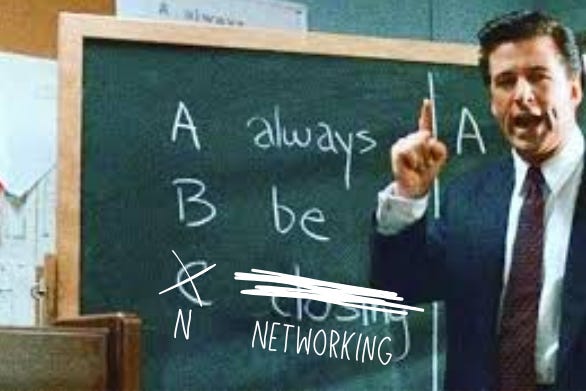
How to Know People
For reference, I’m writing as an animation TV writer who lives in LA. I’ve written this for people outside the industry or just starting out, defining terms and describing situations I didn’t know about when I was trying to break in.
Big caveat here
The industry is changing. Hard. For the last couple of years, landing any entertainment job has been especially tough. I believe it’s because we’re sprinting toward a revolution. Many of the ways things have been done are shifting.
But one thing that won’t change is that you can’t do this alone. You’ll always need to convince someone that you, your ideas, and/or your skills are worth investing in.
So knowing how to know people will always be useful.
It’s dating, for work
The core of networking is: find people you actually connect with.
Like with dating and friendship, you’re not going to click with everyone. That’s okay. It’s not you.
I cried after my first awkward general meeting with an executive and thought I’d never have another one.
But soon I met people whom I genuinely liked. Now, thanks to networking, I have executive friends I meet up with just to chat about Hitchcock movies.
Chances are people who sought out a similar career to you have other shared interests (like chatting about about Jimmy Stewart and mid-century homosexual representation in cinema.) Having these genuine connections makes it a lot easier to shake off bad meetings and look forward to the next one. But first you gotta have the meetings.
Change your head about networking
If you think networking is scary, chances are you’re thinking about it all wrong.
Remember: Everyone Networks
Nobody thinks it’s weird that you’re reaching out to them.
Networking is how this entire industry is run. You’re never going to see a job post on Indeed for a staff writer or a writer’s assistant. Those jobs come from networking. When you reach out to someone, they realize you’re trying to network believe me, they get it. I GUARANTEE that person is doing the exact same thing.
Steven Spielberg networks. Every person who wrote one of his movies networked to get there. Everybody networks. Okay? Everybody.
You’re not weird for jumping in, no matter your level of experience. Everyone starts somewhere.
Executives want to meet writers
Executives aren’t scary gatekeepers. They are constantly on the lookout for talent. Meeting potential new writers/creators is literally what executives do. You aren’t wasting their time.
When you show up for that meeting, they’re hoping to connect with a talented person they get along with. They’re hoping you’ll make their lives easier by being the creative they’ve been looking for. And you won’t know if you’re that person until you meet.
Be Yourself
I know, I know. Easier said than done. I, too, have no idea who I am.
But, it’s your imposter syndrome telling you that you’re unqualified. And that weird thing you think you need to hide might actually be your ticket to an opportunity.
Do you have your PhD in piano and didn’t go to film school?
Are you a parent to a toddler?
Are you new to this because you’re switching careers from being an accountant?
Guess what? Any one of those skills, experiences, or knowledge bases might be exactly what they need. You won’t know until you meet them. So do it.
They have five bajillion USC film school grads walking through their doors. The thing that makes you unique is the key to everything. So figure out what it is and wear it loud and proud on your chest like a Miss America sash.
Remember those executives whom I chat Hitch with? That led to a freelance gig where I got to write Hitchcock-inspired episodes. Good thing I met those people, huh?
STEP 1: FIND THE PEOPLE
LinkedIn
The Basics: A networking platform for professionals. It’s work social media. A place to display your resume, find and reach out to other professionals.
This is the cornerstone of my networking. It’s how I find and initiate meetings.
Fill it up with all your jobs, industry and non-industry alike. Don’t worry that it doesn’t make you look experienced. We’re talking about meeting people, not about looking like something we’re not. Right? And if connection is key, then be yourself.
I have people trying to break into preschool TV reach out to me on LinkedIn regularly. When someone reaches out, I don’t then click on their profile and make sure they have enough credits to be worthy of my precious time. You know why? I’m not a dick.
And while there are plenty of dicks out there, there are mostly nice normal, non-genital people.
Connect with people
You can start with me! Here’s my LinkedIn. I’d love to connect. (Make sure you click “Connect,” not just “Follow.”)
As you make LinkedIn connections, it’ll suggest other people to you. If you’re in the industry, connect with people you know or have met. If you aren’t, I suggest pulling up the IMDb of shows you love, looking up the writing staff, and then connecting with them.
Connect with the people who have the job you want next, not just the ones who have your dream job. When someone tells you how they got their foot in the door, it’s much more useful if said footing happened recently, not, like 1972.
For example, reach out to:
Writer’s assistants
Script coordinators
Writers’ PAs
If you’re a writer, meet other writers but also meet storyboard artists and designers (again, animation specific here, but that’s my world.)
The key is: don’t just try to meet Story Editors or Showrunners, thinking they’re the ones with jobs to give.
And don’t just reach out to development executives thinking they can get your show made. Very few people’s first credit is the show they created.
Remember, this isn’t about getting a job. It’s about building a network. It’s from your network that you will get a job. But no skipping steps!
You gotta start with a good hearty network with a thick well-seasoned broth. I’m talkin’ real stick-to-the-ribs-type networking here. That’s the only way to survive the harsh entertainment job-market winters.
Leave a note?
When you click “Connect,” LinkedIn will ask if you’d like to leave a note.
The answer is always YES.
Tell them either how you know them or why you’d like to connect.
Here’s an example of a message I might send someone I haven’t met:
Hi (person’s name), I adore the writing on (TV show they write for). I’d love to hear about how you got away with such a cool, flawed character in a preschool series. Can we chat on Zoom sometime? Here’s my email — (my email)
My formula:
Their name
Intro
Specific compliment or comment
Specific request
My email
Do NOT send the same thing to every person. You are doing this with intention.
Make it quick. Make it personal.
People are busy. People love compliments. People love to chat about the thing they love doing.
The goal is to build a community! I ask my LinkedIn Community things all the time. Like this post I made asking for advice on networking.
Once you have a real beefy network, you can use that to meet other people. Say you’re looking up the writer’s assistant on your favorite show on LinkedIn and you see you have a mutual friend. Nice one! Pats on the back for you.
Now, instead of messaging that person on LinkedIn, ask your mutual friend to introduce you. A personal introduction is always better than a cold email.
There’s a good chance your mutual will say yes. You aren’t bothering them. This is all part of networking. They also like the chance to reconnect with that person and remind them they exist.
I told you everybody is networking. So get in there!
The email back
Hooray! Someone either emailed you back or responded to your LinkedIn message with their email. Two pats on the back! Both hands!
Here’s what you do:
Hey (person),
It was nice meeting you on LinkedIn. (Alt: I got your email from name. Or “I’m so glad so-and-so put us in touch!) I would love to chat more with you if you’re down for a Zoom.
I’m free the afternoons of 1/18, 1/19, or 1/25, or in the morning on (X date).
You must give them specific times to meet. Give them about three times you’re available. If they can’t do those times, they’ll suggest others.
You want to make things as easy for them as possible.
That’s imporant, I’m going to write it again in bold.
People are busy. Make things easy for them!
Make it so they only have to glance at their calendar to say “yes.”
I’ve gotten a number of open-ended LinkedIn messages from people asking to meet up, and if there are no times listed, I put off responding and sometimes forget altogether. I’m sorry that that is true but it is.
Things not to do
Don’t send a message without a call to action.
Unless you just want to send a compliment with no intention to meet. Otherwise, say, “I’d love to chat with you on Zoom,” or “I’d love to meet for coffee.” Don’t just reach out in the hopes the other person will ask you to meet.
Remember: make this as easy for them to say yes as possible. Don’t play games or be coy. If you want to meet them, say it (and you do, so do it).
Don’t send them any materials.
Do not send your deck, your pitch, your script. Nothing.
Some people are legally not allowed to see that stuff without an NDA in place, so don’t even throw it into the mix. It makes it harder for them to say yes.
(NDA = Non-Disclosure Agreement. It’s a legal document essentially saying, “If we happen to make something similar to what you showed us, don’t sue us.”)
Never send anybody anything unless they explicitly ask. I said this is like dating, right? You need consent to send pics. Don’t be a creep.
I’ve had people send me paragraphs listing all the awards they’ve won, plus a deck to their series, but never saying they want to meet. What am I supposed to do with that information? I don’t have the power to make their show. I just ignored it. Other people will do the same to you.
Remember, you aren’t trying to sell your show. You aren’t trying to get hired to write. You are meeting people. You making genuine connections.
That’s why this shouldn’t be scary! You’re reaching out to people doing the job you want so you can ask them about it. Haven’t you always wanted that?
I hope you take comfort in knowing you don’t need to have anything prepared. Just meet the people.
OTHER WAYS TO MEET PEOPLE
Mentorships
The Basics: Join an organization with a mentorship program (usually there’s a yearly fee). Apply for the mentorship. They pair you with a more experienced professional you can ask industry questions.
Examples: Women in Animation, Children’s Media Association, Hollywood Radio and Television Society, Creators Society
I have mentorships to thank for my career. I joined Women in Animation and was paired with a lovely head writer from Disney Junior.
We genuinely clicked. This was seven years ago, and we still chat regularly. Best of all, she LOVED my writing and got it into the hands of people who hired me into my first job as a writer’s assistant.
This is not always the case. I’ve been in tons of mentorships since then. I’d say about half were genuine connections. The others weren’t.
I will admit, it took me a while to realize there’s no use trying to force a spark. That’s not how it works. If it’s not there, just be polite. Get to know their story. Learn from their experience. Move on. Don’t beat yourself up about it.
And absolutely do NOT let it turn you off trying again.
If they don’t like your work or conversation is strained, oh well, that’s one person. Time to meet more.
Contests
Contests are essentially a way to network. Either there’s a festival you can attend to meet other creatives, or the winnings include access to an executive.
Make sure you do this. I’ve heard of people saying “I won a meeting with an exec x-years ago, but now its too late.”
No. It’s not. There isn’t a time limit on this. Do it now. I guarantee they don’t care. In fact it’ll give you something funny to start the convo with. Better late than never.
If you win something, talk about it on LinkedIn. Then when you reach out to people, they’ll see it.
Here’s a LinkedIn post I made about my festival win.

When I won Best of the Fest with my Poodle Lagoon script, I used that as an excuse to reconnect with people I hadn’t chatted with in a while.
Example:
Hi (name),
How are you? It’s been a while since we chatted! (Throw in something personal.)
I’m excited to share that my script won Best Short Script and Best of the Fest at the Los Angeles Animation Fest this past weekend.
I’d love to catch up. I’m available (specific times).
Remember: the key is to keep the relationship alive. This isn’t a one-night stand.
The most important thing I can say about contests is this, they are NOT a way to get out of networking. If you win a contest people aren’t going to come knocking on your door begging to give you a job or hire you. Winning a contest is just another way to network.
Maybe I should have said this earlier, but people like working with people they like. People want to hire people that others vouch for. That’s why we’re doing this. The vast majority of people would rather hire a solid dude* who gets their shit done than a contest winner they’ve never met.
I’m not going to say contests are a waste of time, you do you, but they are not a way to get around networking.
(*As a native Californian “Dude” refers to both genders. I wish I could put a Good Burger gif here but ugghhhh, Dan Schneider.)
Networking Events
I’m awkward at networking events. That’s why my preferred method is reaching out on LinkedIn or getting an intro and then meeting one-on-one, either in person or on Zoom.
That said, I’ve met some of my very best industry friends at networking events. Like Alyssa Feller! We met at a Mixie Cartoon Mixer and now we are genuine buds. I was even on her Podcast, That One Weird Job, Twice!
There are various meet-ups around Los Angeles you can join. All of the programs with mentorships I mentioned also have meetups. Check Meetup.com, Instagram, and ask the people you meet what their favorites are.
In fact, put them in the comments if you know one!
STEP 2: TYPES OF MEETINGS
Generals
When you meet with an executive for the first time, they may label the meeting a “general.”
That means you aren’t pitching a series or talking about something specific, just meeting generally to get to know one another.
I once heard someone define a general as “a job interview for a job that doesn’t exist yet.” While that helps with the gist, I want to reiterate: this isn’t about getting a job. It’s about building a network.
If you go in with an attitude of “JOB! JOB! JOB!” it will get in the way of connecting (and ruin your chances down the line).
Zoom / Google Meet / etc.
Generals and other meetings may take place on Zoom.
This is great. It expands who you can meet and makes it harder for people to say no.
If you’re the one asking for the meeting, it’s best if you set it up with a video link and send the invite. When you’re meeting executives, this usually isn’t necessary. But if you’re meeting other writers etc. I find this is best practice.
Remember: the free version of Zoom times out at 45 minutes. Google Meet does not have a limit for 1:1 meetings.
Set the meeting for one hour and be respectful of their time. Start wrapping up around the 50-minute mark and always end at the scheduled time unless they say it’s cool to keep going.
Coffee
“Coffee” usually refers to the time of day (before noon). Sometimes it also implies a shorter, 30-minute meeting (though I’ve had coffee meetings that lasted an hour).
If it’s in person, it’ll likely be at a coffee shop.
Lunch
If it’s in person, expect to be eating. Usually an hour-long meeting around noon or 1:00.
Pitch
This is a meeting with a development executive where you pitch a series.
I’m bringing this up as a contrast to a general. If they want you to come prepared to pitch, you’ll know it. The meeting will be labeled a pitch.
Otherwise, it’s just a get-to-know-you general. So, don’t sweat it.
QUESTIONS
What if they don’t answer my email/LinkedIn request?
Chances are they got busy. You didn’t do anything wrong. Your email flew under the radar. You can follow up in two weeks. After that, move on. Maybe they’ll get back to you, maybe they won’t. There are plenty of other fish.
How do you keep your network organized?
I use Airtable to keep a running list of people I know. I have a spreadsheet with names, contact info, where they work, and what they do. The most important part: I write down questions or topics before the meeting. Then afterward, I jot down fun facts, things in common, or notes that might help in a follow-up.
I’m very forgetful, so this keeps me organized.
What do we talk about?
Genuine connection is key, right? So before you reach out, research their work. Watch their stuff. That gives you something specific to bring up.
Have a list of genuine questions about them and their path. People love talking about work they’re passionate about.
Haven’t you always wondered how people got to the position they’re in? Now’s your chance to ask. This doesn’t make you look silly. Everybody’s path is different. Ask and learn. It’s exciting! It’s fun! This job is fun! People like to talk about it.
My go to question is “What was the thing you watched that made you want to do what you do?”
I love hearing people’s superhero origin stories. They’re all different. It unlocks something. It turns them back into the kid who just loved animation (or movies, or TV). And that blooms into a very genuine conversation.
I get annoyed when I realized I didn’t get a chance to ask that question of people and usually turns into a follow-up so I can find out.
So that about wraps it up.
What other questions do you have about networking? How do you feel about it? What’s your favorite part? Your least favorite part?
Ask in the comments and we can chat more (see what I did there?)